52 - 55


- Super User
- Category: Information
- 948
Professor Jane Heyworth is Sub Dean Undergraduate Majors in the Faculty of Medicine, Dentistry and Health Sciences at The University of Western Australia. She is an environmental 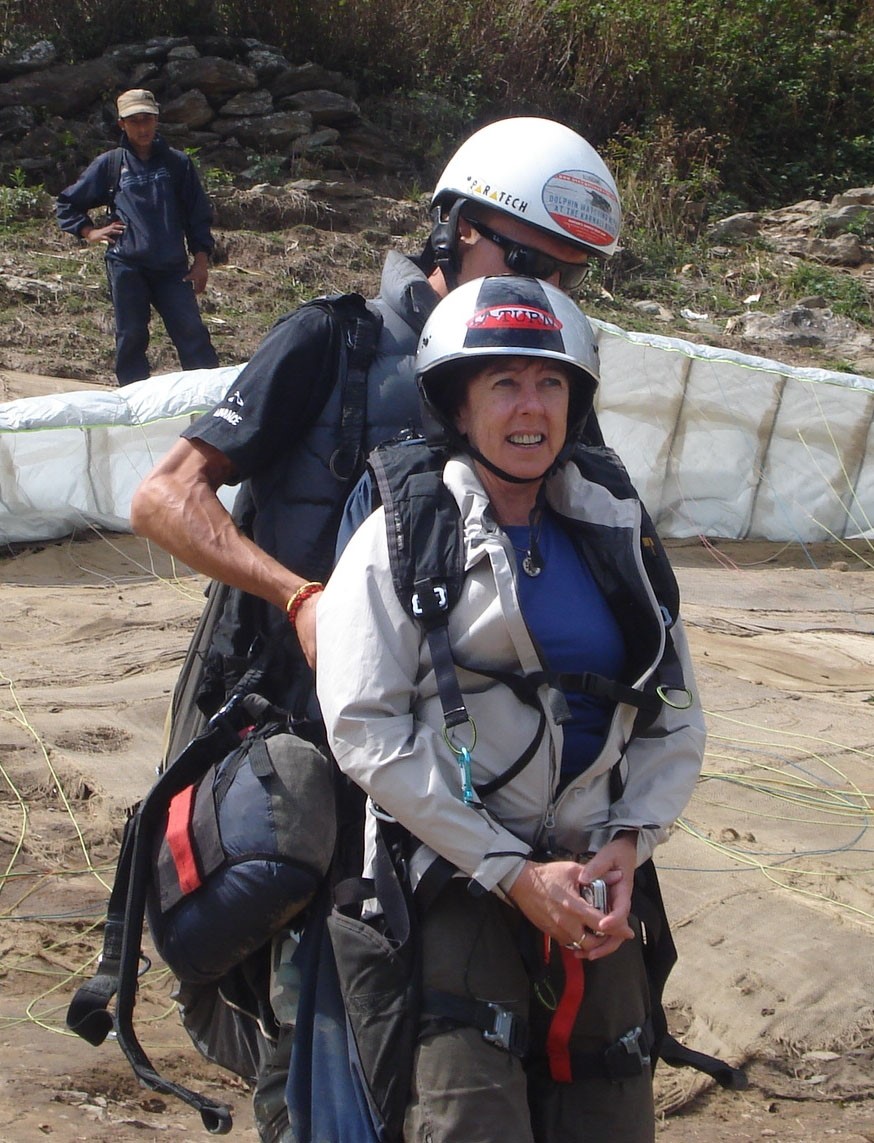 epidemiologist with specific research interests in environmental causes of cancer and the impact of air and water contamination on health. Her research has focussed on a number of environmental exposures including asbestos, pesticides, brominated flame retardants, heavy metals, heterocyclic amines, shift work and microbial contaminants of water. Jane Heyworth’s current research interests include research on health impacts of air and water quality and heat stress in the workplace. Her main areas of teaching are epidemiology and public health and she has won several local and national awards for teaching.
(Photo of Jane Heyworth paragliding in Nepal.)
- Super User
- Category: Information
- 6587
Lesley Blogg works as a medical writer and runs her own scientific consultancy and language editing business, SLB Consulting, from her home in the north west of England. She started her scientific career  with an interest in animal exercise physiology, working at the Animal Health Trust in Newmarket while writing her degree dissertation, then moving on to Birmingham University and a PhD investigating the central control of the diving response in birds and mammals. From there, she took a sideways step to human divers, working with the physiologists studying decompression illness and submarine escape and rescue strategies at DERA/QINETIQ in Alverstoke and also training as a hyperbaric paramedical attendant and engineer.
She moved to Stockholm in 2002 and started her long-standing collaboration with Dr Mikael Gennser and the Swedish Navy. Returning to the UK, her consultancy was founded, and work continued with Sweden, now focusing more on diving than submarine escape, while other collaborations were forged with Alf Brubakk’s diving group at NTNU, Trondheim, Norway.
Alongside research, Lesley started to help non-native English writers with their manuscripts and theses, and so the editing side of the business was born. In 2012, she was voted EUBS Member-at-Large. She was appointed the European (Deputy) Editor of Diving and Hyperbaric Medicine in September 2014, succeeding Peter Müller. With the onset of Covid-19 making travel difficult, Lesley became a full-time medical writer for Fishawack Health, but continues with her DHM editorship and some editing work.
- Super User
- Category: Information
- 5209
Professor Bennett is the Academic Head of the Department of Anaesthesia, a Senior Staff Specialist in diving and hyperbaric medicine at Prince of Wales Hospital and Conjoint Professor in 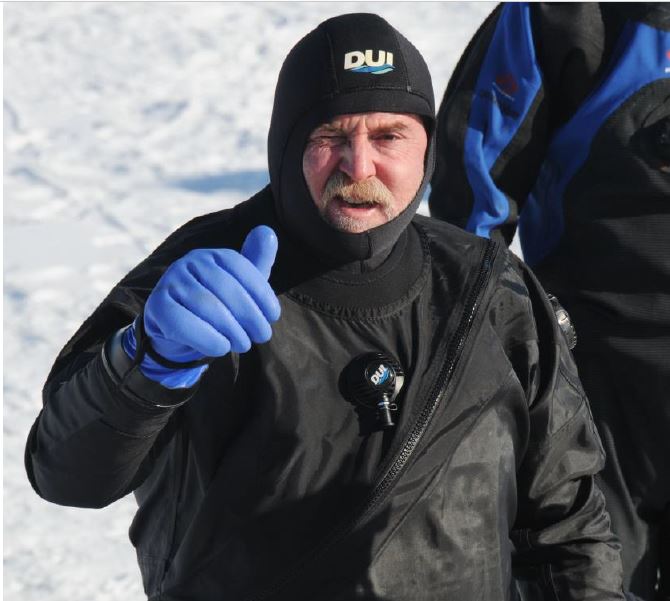 the faculty of Medicine, University of New South Wales in Sydney, Australia. He graduated from the University of New South Wales in 1979 and spent his early post-graduate training at the Prince Henry/Prince of Wales Hospitals before undertaking training in Anaesthesia in the UK. He returned to Sydney in 1990 as a retrieval specialist on the Lifesaver Helicopter and here developed an interest in both diving and hyperbaric medicine. He also has a strong interest in clinical epidemiology and is an experienced clinician and researcher. In 2002 he was the recipient of the Behnke Award for outstanding scientific achievement from the Undersea and Hyperbaric Medical Society.
- Super User
- Category: Information
- 5185
Born in Tasmania in 1960, David started scuba diving in 1981. Since graduating in 1984, he has always been active in diving and hyperbaric medicine, spending many hours when an 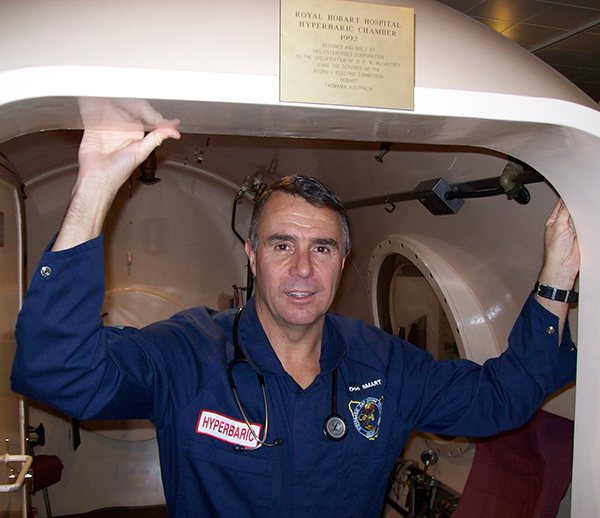 intern as ‘nurse’ attendant in the old Royal Hobart Hospital (RHH) hyperbaric chamber, while his more senior colleagues supervised. He completed his DipDHM in 1987 and FACEM in Emergency Medicine in 1991. After time in Adelaide and Fremantle, he returned to Hobart, and in 1995 he was appointed Director of Emergency Medicine, and Chair of the Scientific Committee (ACEM), as well as working in hyperbaric medicine. In 1998, he became Medical Co-director of Diving and Hyperbaric Medicine at RHH, and the following year was appointed Clinical Associate Professor in Diving and Hyperbaric Medicine, Faculty of Health Sciences, UTas; all this and running a private emergency medicine facility! Whilst in Fremantle, he commenced research on expired carbon monoxide (CO) as a marker for CO poisoning, but because of his clinical commitments, this took many years to complete as a doctoral dissertation. David has been heavily involved in diving medicine in numerous roles including medical consultant to various professional diving industry organisations; an examiner in Diving and Hyperbaric Medicine, ANZCA; Chairperson of the ANZHMG; SPUMS Education Officer; SPUMS representative on the Australian Standards Committee on Occupational Diving, and in 2017 was re-elected SPUMS President for a second term. David now works full-time in Diving and Hyperbaric Medicine, and is heavily involved in the strategic development of Post-Graduate training in Hyperbaric Medicine. He also actively teaches at three of Australia’s courses in Diving and Hyperbaric Medicine, and has over 130 published scientific papers and abstracts. He has received national and international awards: The Derek Craig award (ADAS), Fellowship of Undersea and Hyperbaric Medicine (UHMS), and Excellence in Commercial Diving Award (UHMS). In 2014, he was invited to provide medical supervision of the Australian Antarctic Diving Program at Casey Base. His research interests include: Doppler analysis of decompression stress; Doppler validation of sub-2400 m ascent to altitude guidelines; hookah diving safety, inner ear barotrauma, HBOT for lower limb trauma, oxygen delivery systems, diving risk management and in-chamber monitoring equipment. He is married with two daughters (both with gills!), and pursues many hobbies; carpentry and joinery, swimming, scuba diving, boating and fishing, and underwater photography.
(Photo taken during his Antarctic work with AAD.)
- Super User
- Category: Information
- 8059
David Doolette is the Scientific Director of the U.S. Navy Experimental Diving Unit and an Associate Professor of Anaesthesiology at the University of Auckland. He has more than three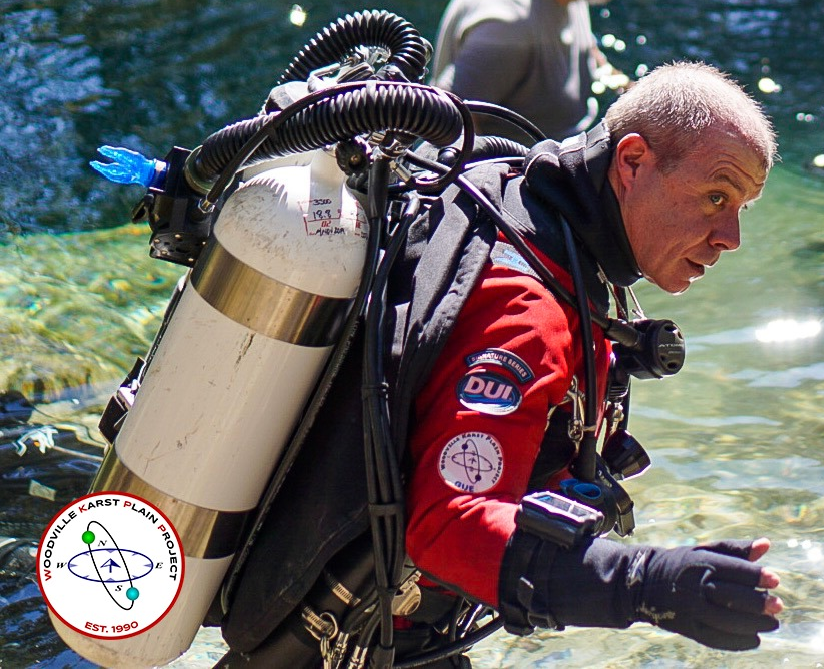 decades of research, development, testing, evaluation, and operationalization of new diving technologies. He is a leading international expert in the physiology, prevention, and treatment of decompression sickness. Other areas of expertise include saturation-excursion diving, submarine lock-in/out diving, closed-circuit rebreather diving, diver thermal protection, and diver fitness. In addition to contributions to the scientific literature, he has authored many military technical reports, contributed to the U.S. Navy Diving Manual, and written many other specialized diving procedures. He began diving in 1979, is a pioneer of technical diving, and an avid underwater cave explorer. He engages frequently with the recreational and technical diving communities as scientific communicator and has made profound impact on the way these communities dive. In recognition of outstanding contributions to undersea biomedical science, the U.S. Navy, and recreational and technical diving, he is a recipient of Assistant Secretary of the Navy Delores M. Etter Award, the Undersea and Hyperbaric Medical Society (UHMS) Albert R. Behnke Award and the U.S. Navy Meritorious Civilian Service Award. He has been a member of the Undersea Hyperbaric Medical Society since 1987 and a member of the South Pacific Underwater Medicine Society since 1990 and was that Society's Education Officer from 2001 to 2004.